
Select your language

B100
Fuel in rail transport
About the project
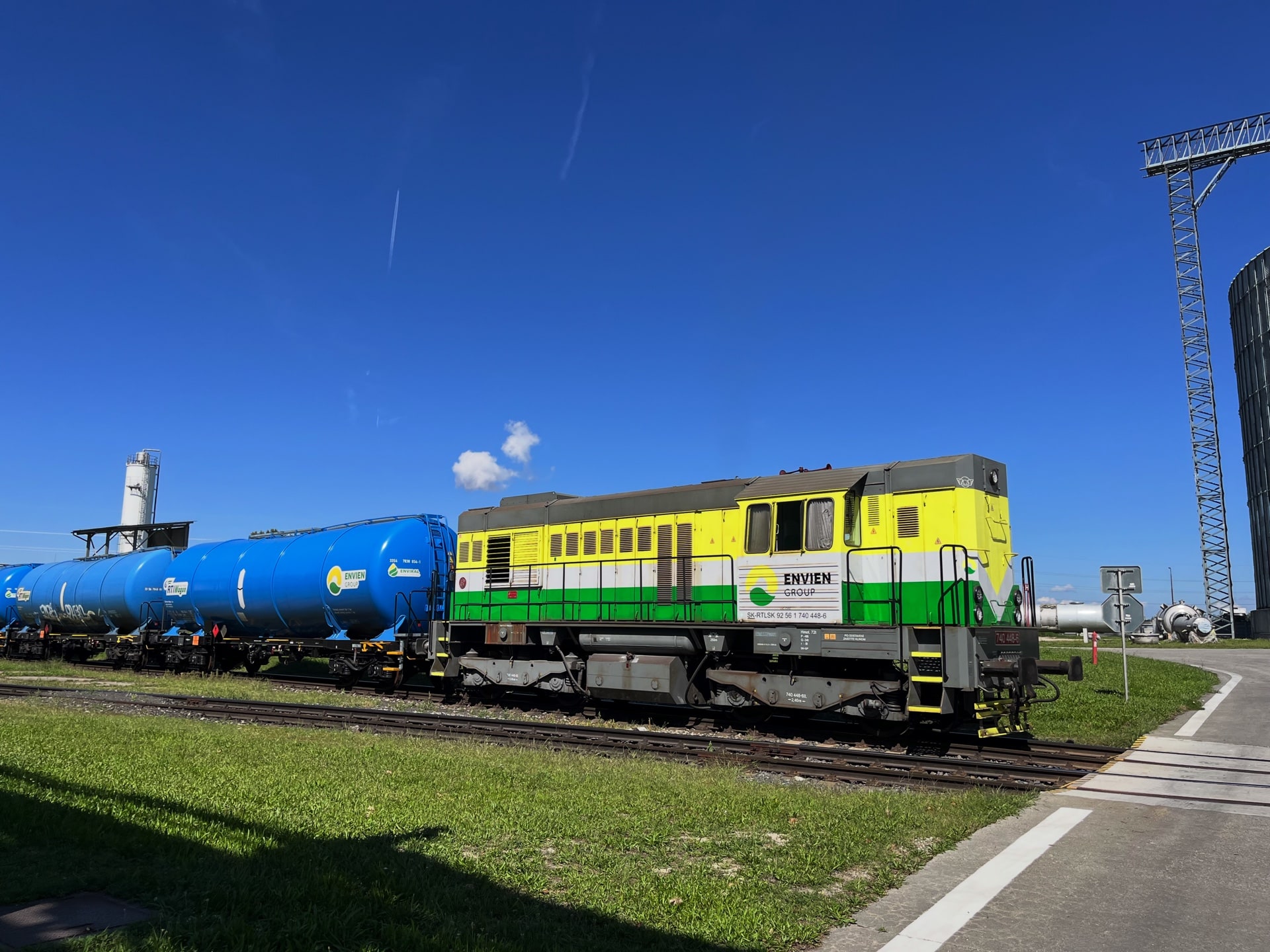
The SK-Bioride pilot project was launched by the Slovak transport company Yellow Express in 2021, introducing a new freight vehicle—a Scania truck adapted for low-emission operation running on 100% biodiesel (B100). In April 2024, RT Logistic, a member of Envien Group, joined the project, using the same type of fuel to power its ČKD 740 locomotive, and thus examining in everyday life the feasibility of a cleaner rail freight alternative that can be implemented immediately—and with a proven 70% reduction in greenhouse gas emissions. The B100 fuel is supplied by Meroco, a regional biofuel producer and member of the Envien Group, which manufactures B100 sustainably. In rail transport, B100 fuel is a suitable alternative to fossil diesel on railway lines where electrification is not economically viable.
Why did we launch the SK-Bioride campaign?
With its current renewable energy (RES) capacities, Slovakia is currently in a position where it cannot meet its 27% renewable energy target for 2030 without significantly increasing the share of biofuels in transport. Through this campaign, we demonstrate that increasing the share of renewable energy in transport using high-biofuel-content fuels is possible even today, and has the potential to become the most cost-effective solution for urgent energy and environmental goals.
How long did the pilot project last, and what was its aim?
The ČKD 740 locomotive (HDV series 740 T448.0948) was powered by B100 fuel from April 2024 to May 2025 in regular operations at the premises of our partner, Envien Group. During this period, we monitored the reliability of the shunting operation, fuel consumption, and service intervals. No technical complications were recorded during the first months of testing. A technical issue arose only after 10 months of operation using the B100 fuel, when the rubber sealing on the fuel injectors corroded. After the injectors were repaired, testing continued without technical complications. Modern engine systems use more resistant materials, such as Viton, for biodiesel operations. During testing, the locomotive consumed a total of 32,243 Liters of B100 diesel over 7,200 kilometres, with emission savings of 52 tons of CO₂. The consumption of B100 fuel is comparable to that of B7 fuel, and its use does not affect regular maintenance, such as fuel filter changes.
B100 fuel is currently not used in rail transport in Slovakia. The aim of this project was to pilot test it and provide a comprehensive view of its practical use in this segment. By introducing B100 diesel into rail transport, we would offer transporters an alternative to fully fossil fuels in the form of low-emission fuel that could be used on tracks where electrification is not profitable. In the future, this fuel could also be used by industrial companies operating non-electrified rail lines, as is the case with our shunting locomotive. By replacing fossil diesel with biodiesel, rail companies would, for example, achieve better ratings in their internal ESG reports.
How can B100 fuel reduce CO₂ emissions over the entire lifecycle compared to diesel?
B100 fuel is 100% renewable, made from vegetable oil or used cooking oil—a repurposed waste material that finds a new use. Fossil diesel emissions are around 95.1 g CO₂/MJ, but biofuel from vegetable oil has a carbon footprint of only 33 g CO₂/MJ, and biofuel made from waste materials (used cooking oil) has an even lower footprint of around 9 g CO₂/MJ. The difference is enormous: B100 made from waste oil reduces CO₂ emissions over the vehicle’s entire lifecycle by up to 90%.
Food vs. (bio)fuel
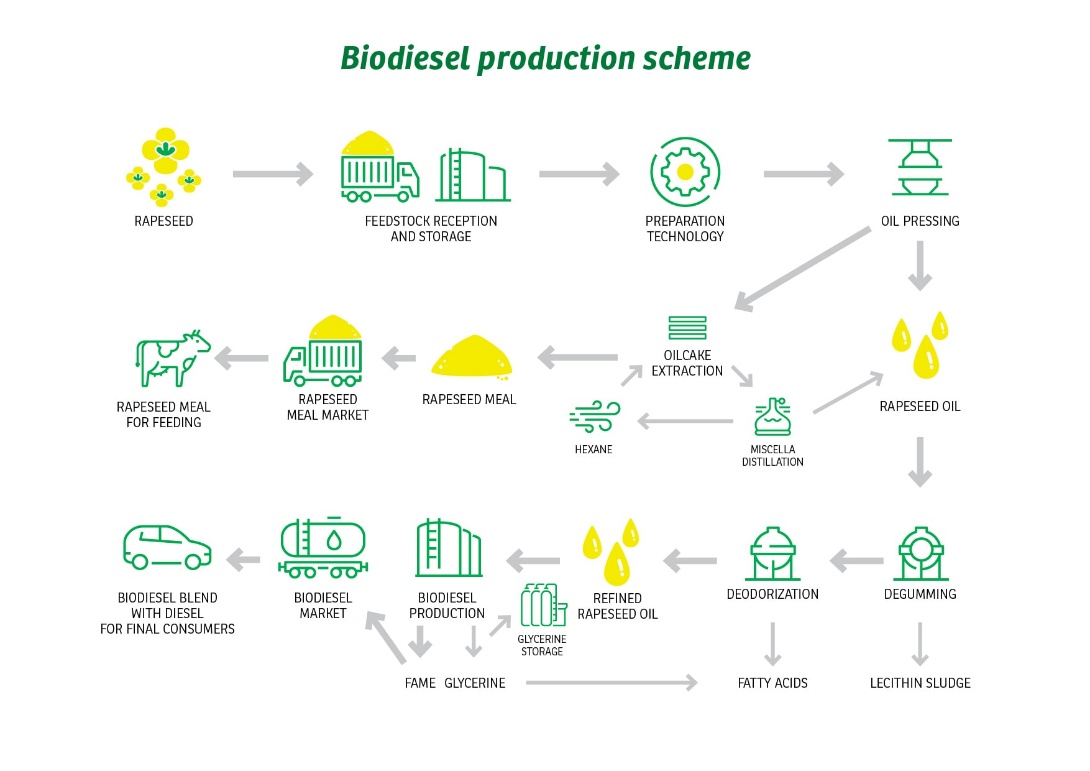
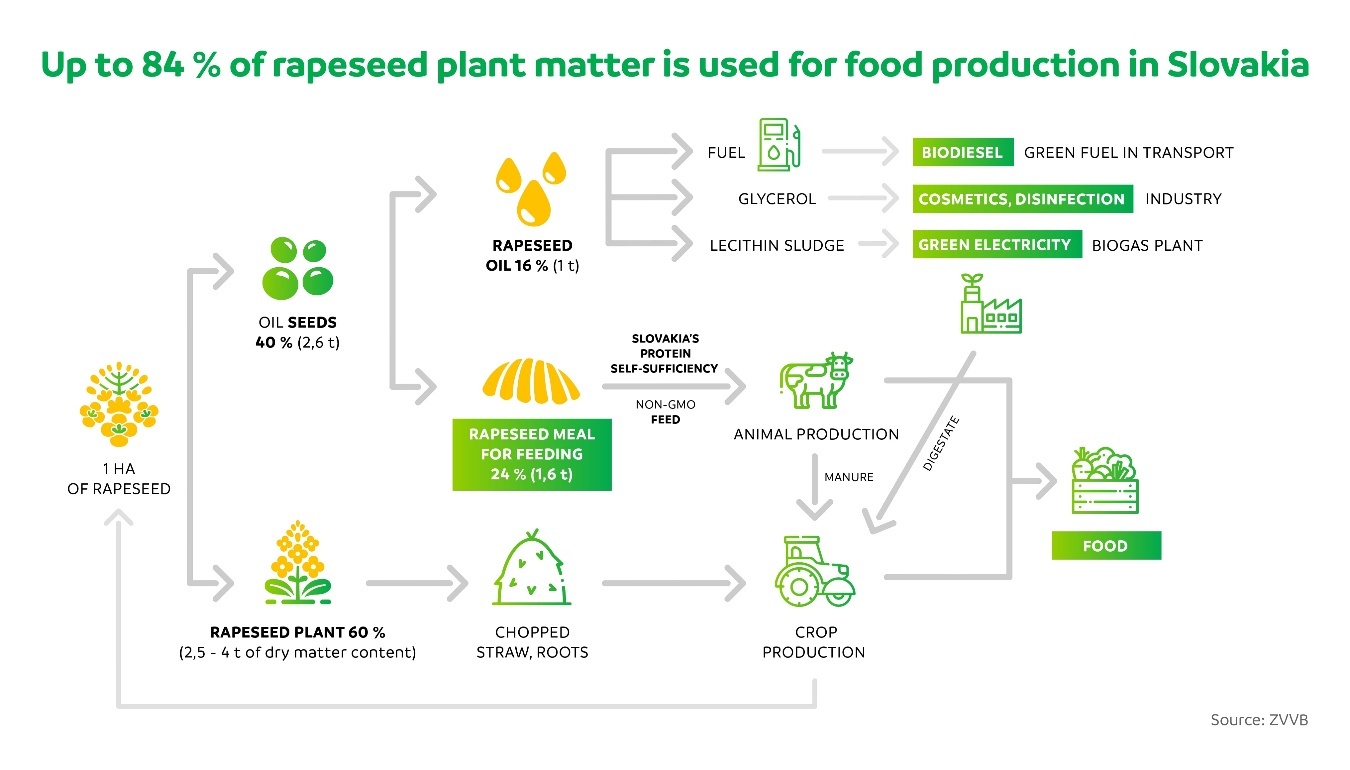
Only a smaller portion of rapeseed is used for biodiesel production. After the oil is pressed, more than 50% of the processed material remains as rapeseed meal (with a high protein content of up to 35%). This locally produced feed material, thanks to its balanced nutrient composition, is suitable for all farm animals and can effectively replace imported soybean meal, which often contains GMOs. Biodiesel production therefore contributes significantly to European Union’s protein security. Currently, important research is also underway into the potential use of these proteins in human nutrition.
Did you not find the answer to your question?
Are you interested in learning more? Are you considering implementation of biodiesel in your company fleet?
Write to us at info@biojazda.sk or use the contact form below.